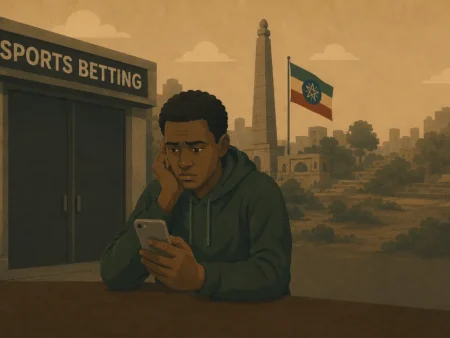

Kenya’s government took a significant step toward reshaping its gambling landscape on May 6, when Felix Koskei, the country’s Head of Public Service and Chief of Staff, convened a high-level joint session in Nairobi. The meeting brought together the Board of the Betting Control and Licensing Board (BCLB) — recently rebranded as the Gambling Regulatory Authority (GRA) — and the Association of Gaming Operators in Kenya (AGOK).
The meeting marks one of the most prominent government-industry engagements since Kenya enacted the Gambling Control Act, 2025, a sweeping piece of legislation that formally established the GRA as the country’s primary gambling oversight body, introducing stricter regulatory requirements and stronger consumer protection measures.
What Was Discussed
According to Koskei, the session followed an earlier engagement directly with the GRA and served as an opportunity to take stock of reforms implemented over the past two and a half years.
“The discussion reviewed reforms implemented over the past two and a half years that restored order and stability in the sector, and examined how to position the industry for sustained growth.” — Felix Koskei, Kenya’s Head of Public Service, speaking at the Nairobi session, as reported by Capital FM
Key topics on the agenda included:
- Responsible gambling measures — including the rollout and strengthening of age-verification systems, self-exclusion programmes, and public awareness campaigns targeting gambling-related harm.
- Regulatory predictability — with both the government and industry flagging the urgent need for a stable and transparent framework capable of sustaining long-term investment.
- Ethical conduct and compliance — including tighter advertising restrictions and enhanced licensing requirements.
- Balancing economic benefit with public welfare — a recurring tension at the heart of Kenya’s gambling debate.
Koskei also reaffirmed the government’s commitment plainly: “Government remains committed to a transparent, fair and well-regulated gaming industry that protects the public interest while supporting enterprise and investment.”
A Market That Has Been Through the Wringer
These talks don’t happen in a vacuum. Kenya betting sites and iGaming market has experienced some of the most turbulent conditions of any regulated market on the continent over the past several years — and the scars are visible.
A combination of aggressive tax measures, shifting regulatory demands, and compliance crackdowns has pushed multiple international and regional operators out of the market entirely. William Hill, BetLion Kenya, and Betin are among those who have shut their Kenyan operations. Others, such as SportPesa and SportyBet, exited the market only to return later — under significantly different terms and conditions.
Each exit doesn’t just represent a business decision. It represents lost jobs, reduced tax revenues, and a shrinking pool of licensed, regulated options for Kenyan bettors.
The Unlicensed Operator Risk
This is where the stakes become most serious — and where the outcome of talks like these truly matters.
When licensed operators exit a market, players don’t stop gambling. They find alternatives. And in many cases, those alternatives are unlicensed offshore platforms operating entirely outside the reach of Kenyan consumer protection rules. These sites offer:
- No recourse for players facing payout disputes
- No responsible gambling tools or self-exclusion mechanisms
- No verified age-gating
- No contribution to Kenya’s tax base
A regulatory environment that is too harsh, too unpredictable, or too costly to operate within doesn’t just punish operators — it puts players at risk. The irony is stark: regulations designed to protect consumers can, if poorly calibrated, drive those same consumers toward platforms with zero protections.
This is precisely why the stability narrative at the heart of the Koskei talks matters so much. It isn’t just an industry talking point. It’s a public safety issue.
A Cautious Welcome
The engagement between the GRA, the government, and AGOK is a constructive sign. High-level dialogue between regulators and operators — when conducted in good faith — tends to produce better outcomes than top-down mandates handed down without industry input.
The establishment of the GRA itself, with its updated mandate and the legislative backing of the Gambling Control Act, 2025, offers an institutional foundation that didn’t fully exist under the old BCLB structure. That’s a meaningful step forward.
But framework changes alone aren’t enough. Kenya’s operators and investors will be watching what follows these talks closely — specifically whether the government’s commitment translates into policies that make it genuinely viable to build sustainable, long-term businesses in the Kenyan market.
What We Hope to See
At BCA, we’ve followed the Kenyan market’s journey with considerable interest — and concern. The potential of Kenya’s iGaming sector is real: a young, mobile-first population, high sports engagement, and a growing middle class with disposable income make it one of, among other Africa’s best betting sites, most compelling markets.
But potential without stability is wasted. What Kenya needs now — and what we hope these high-level talks will deliver — is a regulatory compact that works for everyone: predictable enough for operators to invest with confidence, rigorous enough to protect consumers, and proportionate enough that licensed businesses can actually compete.
The alternative — a market hollowed out by operator exits, dominated by unlicensed platforms, and unable to deliver on its economic and social promise — is in nobody’s interest. Not the government’s, not the industry’s, and certainly not the players’.
The Nairobi meeting was a step in the right direction. The real test is what comes next.